Stink bugs got in? Here is how to get them out — and keep them out.
Stink bug identification, removal and prevention guidance drawn from university extension resources, with links to the sources and tools discussed.
Stinkio compiles published guidance; we do not conduct independent field trials or product testing. Read our editorial policy and source standards.
No squishing. No guessing. Every guide starts with what actually works for a normal US home, then points you to the tools worth buying.
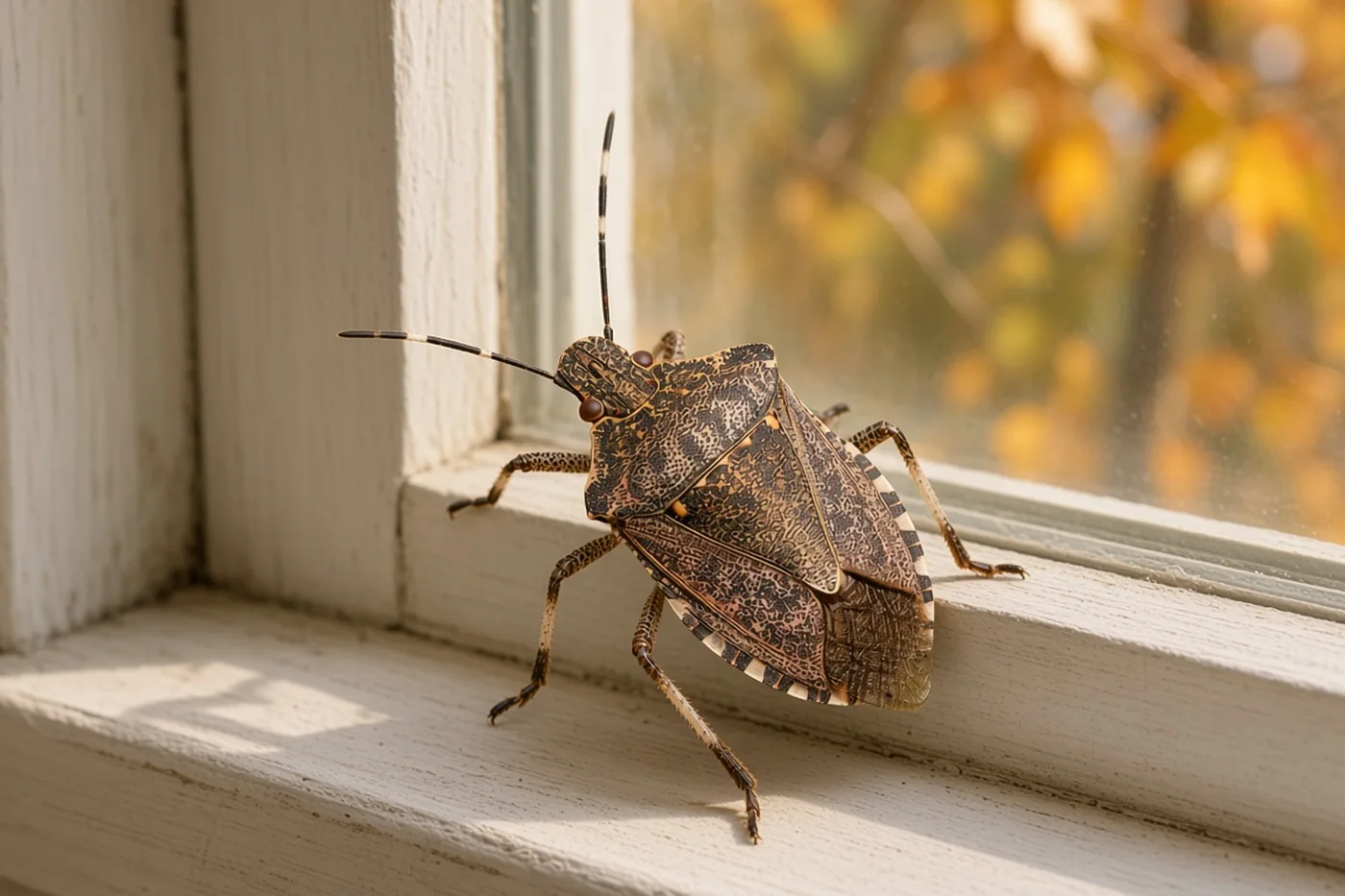
Stink bugs are shield-shaped, about the size of a fingernail, and they show up in force as the weather cools. They do not bite, they do not damage the house, and they are not a health problem — but they can fill a room in late fall, and the smell when you squash one is hard to miss.
Stink bugs inside? Seal, vacuum, trap — the 3-step fix
- Confirm it is a stink bug, not a bed bug — the shape and location tell you fast.
- Vacuum the ones you can see into a sealed bag and empty it outside.
- Seal the gaps around windows, doors, vents and siding so they cannot come back.
What they are actually doing in your house
Brown marmorated stink bugs come indoors for one reason: somewhere warm and dry to sit out the winter. Penn State Extension dates that search to September and October, on warm afternoons, when adults gather on sunlit walls and work their way into any gap they can find. They are not nesting, not feeding, and not breeding in there. The same source is blunt about it: they will not reproduce inside a structure and will not damage it.
Adults that got in stay quiet through the cold months and head back outside around late April to mid-May. That timeline decides your plan. Anything you do in November is cleanup. The work that actually counts happens in September, before the crowd arrives.
The direct answers are on the winter guide: why stink bugs come inside and how to keep stink bugs out of the house.
Why squashing one makes the room worse
The smell is not a defense you can avoid by being gentle. The scent glands sit on the upper surface of the abdomen and under the thorax, and a crushed bug releases all of it at once. It lingers on paint, fabric and hands. A vacuum cleaner handles the same job without the burst — you can pull live and dead bugs straight out of a room — but the machine will carry the smell for a while afterwards, so keep that vacuum out of the kitchen and empty it outdoors.
The openings they actually use
Extension guidance names the same short list every year, and it is shorter than people expect. Seal these with a good silicone or silicone-latex caulk, and repair torn screens instead of patching them with tape:
- Cracks around window frames and door frames
- Gaps where siding meets trim, and behind the fascia board
- Holes where utility pipes and cables enter the wall
- Chimney flashing and the space behind it
- Torn or missing window and door screens
If they are already coming out inside the living space rather than sitting on the walls, the exit points are the tell. Look under and behind baseboards, around window and door trim, around exhaust fans, and around ceiling light fixtures. Those are the seams to caulk from the inside.
What does not work — and why people keep buying it
This is where most of the money in this category gets wasted, so it is worth being direct about what extension guidance says:
- Foggers and bug bombs. They kill the bugs sitting on your walls right now. They do nothing about the ones still inside the wall voids, which start appearing as soon as the room is aired out. Not a fix, a pause.
- Spraying cracks and crevices indoors. The spray does not stop new bugs from emerging. Guidance does not recommend it as a treatment.
- Dusting the wall voids or attic. It can kill hundreds of bugs, and then carpet beetles feed on the bodies and move on to woolens and stored dry goods. You trade one nuisance for a worse one.
- Exterior spray as the main plan. It gives some minor relief when sealing is impossible, and it has to be applied by a licensed operator in the fall just before the bugs congregate. Sunlight breaks the residue down within days to a week, so the protection does not last.
Caulk and a vacuum are unglamorous and they are what the guidance actually recommends. On a normal house, the sealing job is a weekend of work and it holds for years.
If the smell bothers you physically
Most people just dislike it. A smaller group reacts to it: the defensive chemicals can act as an airborne allergen, and people sensitive to cockroach or lady beetle odors tend to react the same way here — rhinitis, irritated eyes. Crushing one against bare skin can produce a localized dermatitis in a small percentage of people. Gloves and a vacuum nozzle solve both.
Season calendar
Same bugs, different behaviour depending on the month. The dates below follow Penn State Extension's life-history notes for the brown marmorated stink bug.
| Period | What is happening | What to do |
|---|---|---|
| Late April to mid-May | Adults leave the walls and head back outdoors | Empty the vacuum, wash the window sills, check last year's caulk lines |
| May to August | Egg laying outdoors; masses of 20 to 30 eggs under leaves | Garden work only — nothing to do indoors |
| September to October | Adults search for overwintering sites on warm afternoons | The one window that matters: seal, repair screens, caulk the seams |
| November to March | Bugs sit quietly inside wall voids and attics | Vacuum whatever emerges; do not fog the room |
Quick answers
Do stink bugs bite?
They do not bite or sting. Extension guidance notes two real health effects: people sensitive to the defensive odor can get rhinitis or conjunctivitis from it, and crushing one against bare skin can cause contact dermatitis in a small share of people.
Will they breed inside my house?
No. Brown marmorated stink bugs do not reproduce inside structures and do not damage them. Indoors they are a nuisance, not an infestation that grows.
When do stink bugs come inside?
Adults start hunting for overwintering sites from September through October, usually on warm afternoons. They leave again around late April to mid-May.
Do bug bombs and foggers work?
They kill the ones already sitting on your walls and ceilings, and nothing more. The room is repopulated by bugs still inside the wall voids shortly after you air it out, so extension guidance does not treat foggers as a real fix.
Can I just vacuum them up?
Yes — both live and dead ones. Empty the canister or bag outdoors, and expect the vacuum to smell of them for a while. Never squash them first if you can avoid it.
Should I spray insecticide inside the walls or attic?
Extension guidance advises against it. Dust treatments can kill hundreds, but carpet beetles then feed on the bodies and move on to woolens and stored dry goods.
Facts on timing, entry points, pesticide limits and health effects in this guide follow Penn State Extension’s brown marmorated stink bug profile (Jacobs, rev. Skvarla).